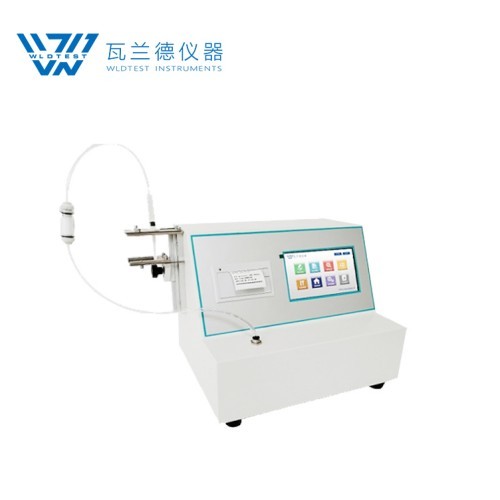



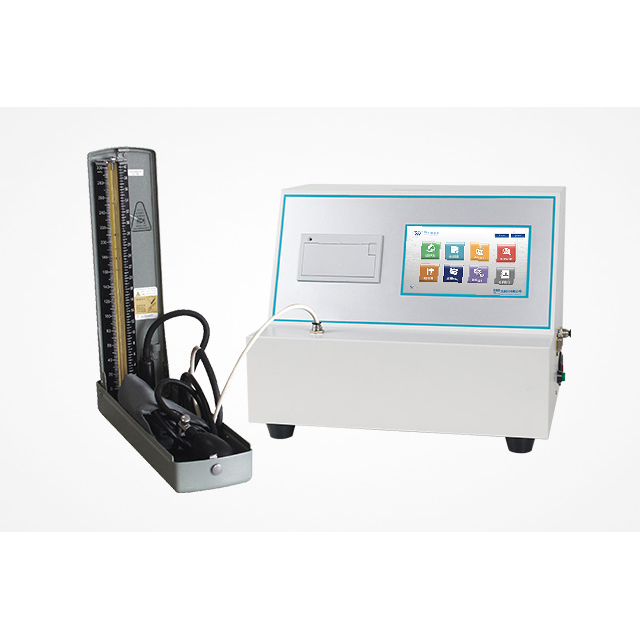
WY-009 Blood Pressure Monitor and Sphygmomanometer Voltage Withstand Tester
The blood pressure gauge and sphygmomanometer pressure resistance test instrument is used to verify whether the materials and design of the pressure-bearing components in blood pressure gauges and sphygmomanometers meet the relevant standard requirements.
Testing Principle
The sphygmomanometer was tested on an instrument with an alternating amplitude of 2.7–37 kPa (20–280 mmHg) and a frequency of (30±5) cycles/min. After recovery for 1 hour, another pressure indication test was conducted, allowing a basic error of ±0.5 kPa.
Reference Standard
GB 3053
- WLDTEST
- China
- 1-7 days
- 100 sets / month
- Information
- Video
WY-009 Blood Pressure Monitor and Sphygmomanometer Voltage Withstand Tester
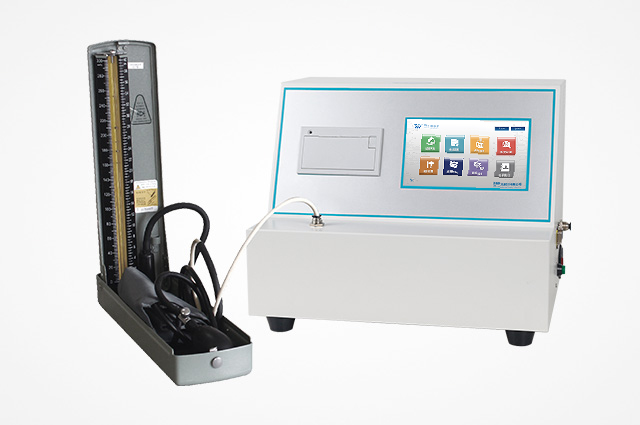
The blood pressure gauge and sphygmomanometer pressure resistance test instrument is used to verify whether the materials and design of the pressure-bearing components in blood pressure gauges and sphygmomanometers meet the relevant standard requirements.
Testing Principle
The sphygmomanometer was tested on an instrument with an alternating amplitude of 2.7–37 kPa (20–280 mmHg) and a frequency of (30±5) cycles/min. After recovery for 1 hour, another pressure indication test was conducted, allowing a basic error of ±0.5 kPa.
Reference Standard
Product Features
l Industrial-grade 7-inch capacitive touchscreen with a menu-based interface, offering convenient and quick operation that is easy to learn, understand, and use.
l Professional software design with multi-level permission management, enabling laboratory administrators to standardize equipment usage.
l Supports remote upgrade and maintenance
l Equipped with a mini printer for customers to easily print test results
l Suitable for testing methods required by various standards including GB, YY, ISO, and ASTM
Technical Specifications
1. Pressure output range: 0 kPa to 40 kPa (0 to 300 mmHg), ±1 kPa (7.5 mmHg)
2. Resolution: 0.1 kPa (0.75 mmHg)
3. Accuracy: ±0.5 kPa
4. Pressure alternating frequency: (30±5) times/min
5. Test duration: 0 seconds to 99.9 minutes, with an error not exceeding ±1 second