



Understanding Infusion Set Leak Testing: Principles, Standards, and Applications
2026-09-21 16:50Understanding Infusion Set Leak Testing: Principles, Standards, and Applications
What Is an Infusion Set Leak Tester?
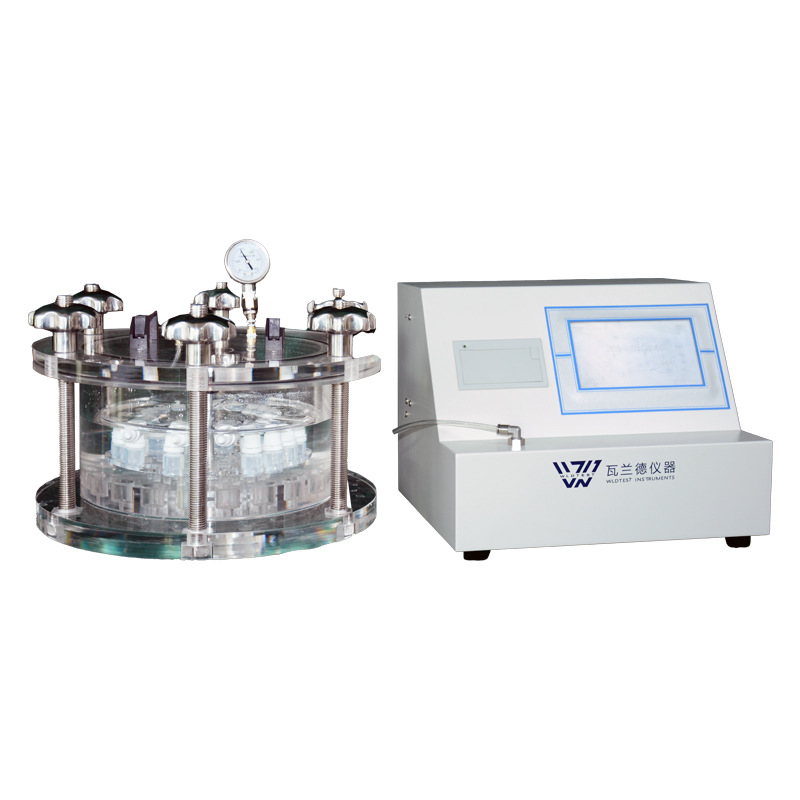
An infusion set leak tester is a specialized piece of laboratory and quality-control equipment designed to evaluate the sealing integrity of intravenous (IV) infusion sets. These devices are essential in medical manufacturing environments, where even a microscopic breach in an infusion line can lead to contamination, medication loss, or air embolism risks. The primary function of an infusion set leak tester is to subject disposable infusion assemblies to controlled pressure conditions and monitor whether any fluid or air escapes from the system.
In modern medical device production, quality assurance teams rely on automated and semi-automated testing platforms to verify that every batch of infusion sets meets strict safety benchmarks. An infusion set leak tester typically integrates pressure generators, precision sensors, data acquisition modules, and reporting software to deliver repeatable, traceable results.

The Role of Positive Pressure Testing
A subset of leak detection methodologies focuses on positive pressure testing. An infusion set positive pressure tester applies air or nitrogen at a pressure above atmospheric levels—commonly in the range of 50 kPa to 160 kPa—to the internal lumen of the infusion set. The equipment then measures pressure decay over a defined holding period, usually between 15 and 60 seconds. If the pressure drops beyond an acceptable threshold, the unit is flagged as defective.
Positive pressure testing simulates real-world clinical conditions where infusion sets must withstand the hydrostatic pressure of hanging fluid bags, peristaltic pump forces, and manual bolus injections. By validating performance under these stressors, manufacturers can confidently release products that will not fail during patient care.
Why Leak Testing Matters in Medical Infusion Devices
Patient Safety and Fluid Integrity
The foremost reason for rigorous leak testing is patient safety. Infusion sets create a direct fluid pathway between a medication reservoir and a patient's bloodstream. Any leakage in this closed system can introduce pathogens from the external environment, reduce the efficacy of life-saving drugs, or cause inconsistent dosing. A reliable infusion set leakage tester acts as the final gatekeeper before products reach hospitals, clinics, and emergency care settings.
Beyond bacterial contamination, leakage can result in air ingress. Even small volumes of air entering the circulatory system pose serious health risks. Consequently, manufacturers test not only for liquid leaks but also for gas-tight integrity across all connectors, tubing walls, and injection ports.
Regulatory Compliance Requirements
Medical device regulations worldwide mandate documented evidence of sealing performance. In the European Union, infusion equipment must comply with the ISO 8536 series. In China, national standard GB 8368 governs the testing protocols for single-use infusion sets. In the United States, the Food and Drug Administration expects manufacturers to demonstrate that their devices meet applicable safety and performance standards.
To satisfy auditors and regulatory bodies, quality teams must maintain batch records that include leak test data. Using a calibrated medical infusion leak detector ensures that these records reflect objective, reproducible measurements rather than subjective visual inspections.

How an Infusion Set Leakage Tester Works
Test Methodology and Pressure Parameters
The operation of an infusion set leakage tester follows a standardized sequence. First, the operator connects the sample to a dedicated fixture that seals the patient-end and bag-end ports. The machine then pressurizes the internal cavity to a preset value, commonly 120 kPa for gravity infusion sets and up to 200 kPa for pressure-rated assemblies used with infusion pumps.
Once the target pressure is reached, the system isolates the pressure source and begins a holding phase. High-resolution pressure transducers monitor the internal environment in real time. Advanced systems can detect pressure losses as small as 0.1 kPa, providing sensitivity far beyond what manual observation can achieve. At the conclusion of the test cycle, the equipment compares the measured pressure decay against programmed acceptance criteria and automatically classifies the sample as pass or fail.
Detection Mechanisms
Modern testers employ several complementary detection methods. Direct pressure decay measurement is the most common approach and forms the basis of most infusion set leak tester platforms. Some systems augment this with differential pressure comparison, where the test article is measured against a sealed reference volume to compensate for ambient temperature fluctuations.
In research and development environments, engineers may also employ tracer gas methods or bubble emission tests under water to locate the exact site of a leak. However, for high-volume production lines, non-destructive pressure decay testing remains the industry standard due to its speed, cleanliness, and compatibility with automated handling systems.
Standards and Specifications
The ISO 8536 family of standards defines the construction, performance, and testing requirements for infusion equipment used in medical applications. Part 4 addresses single-use gravity infusion sets, while Part 8 covers sets intended for use with pressure infusion apparatus. These documents specify the mechanical and physical properties that products must exhibit, including flow rates, connector dimensions, and—critically—resistance to leakage under defined pressure conditions.
Medical Infusion Leak Detector for Catheters and Tubing
Although the name emphasizes infusion sets, the underlying technology of a medical infusion leak detector applies broadly across the medical tubing landscape. Central venous catheters, arterial bloodlines for hemodialysis, enteral feeding tubes, and respiratory circuits all require verified sealing integrity. Many testing platforms accommodate interchangeable fixtures, enabling a single instrument to serve multiple product lines within a medical device factory.
This versatility reduces capital expenditure and simplifies operator training. Quality managers can standardize on one leak detection platform while testing dozens of SKUs, from pediatric micro-bore sets to high-flow pressure infusion tubing.
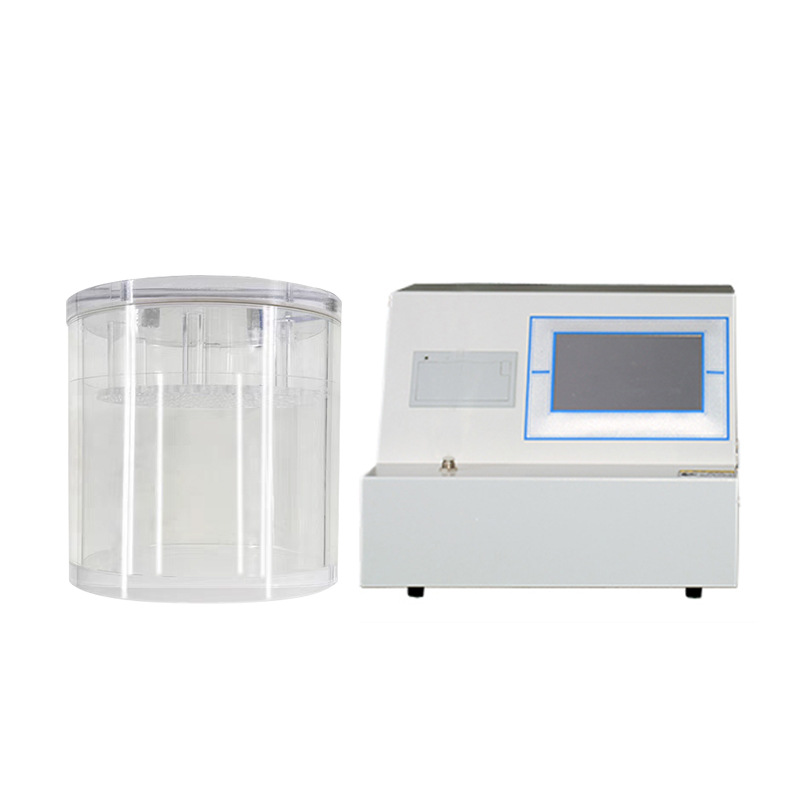
Leak testing is a non-negotiable step in the manufacturing of safe, reliable infusion therapy products. Whether implemented as a standalone infusion set leak tester on a production floor or as part of a broader quality laboratory equipped with a pharmaceutical packaging leak tester, pressure-based leak detection provides objective assurance that medical devices will perform as intended under clinical conditions.