



Understanding the 6% Luer Connector Performance Tester
2026-09-02 15:59Why Luer Connectors Matter
In medical device manufacturing, few components are as small yet as safety-critical as the Luer connector. These tapered fittings — found on syringes, needles, infusion sets, blood transfusion sets, catheters, and anesthesia filters — are responsible for forming leak-free, secure connections between different devices. A poorly manufactured Luer connector can cause fluid leakage, air ingress, accidental disconnection, or even misconnection with an incompatible device, any of which may pose a serious risk to patient safety.
The Luer taper itself is standardized. The "6%" in "6% Luer taper" refers to a taper ratio of 6:100, meaning the diameter changes by 6 millimeters for every 100 millimeters of length. This geometry is the international basis for interchangeable Luer fittings. Because the geometry is fixed by standard, the burden of quality assurance falls on verifying that every manufactured connector actually conforms to it — and that is precisely the role of a 6% Luer connector performance tester.
What the Instrument Measures
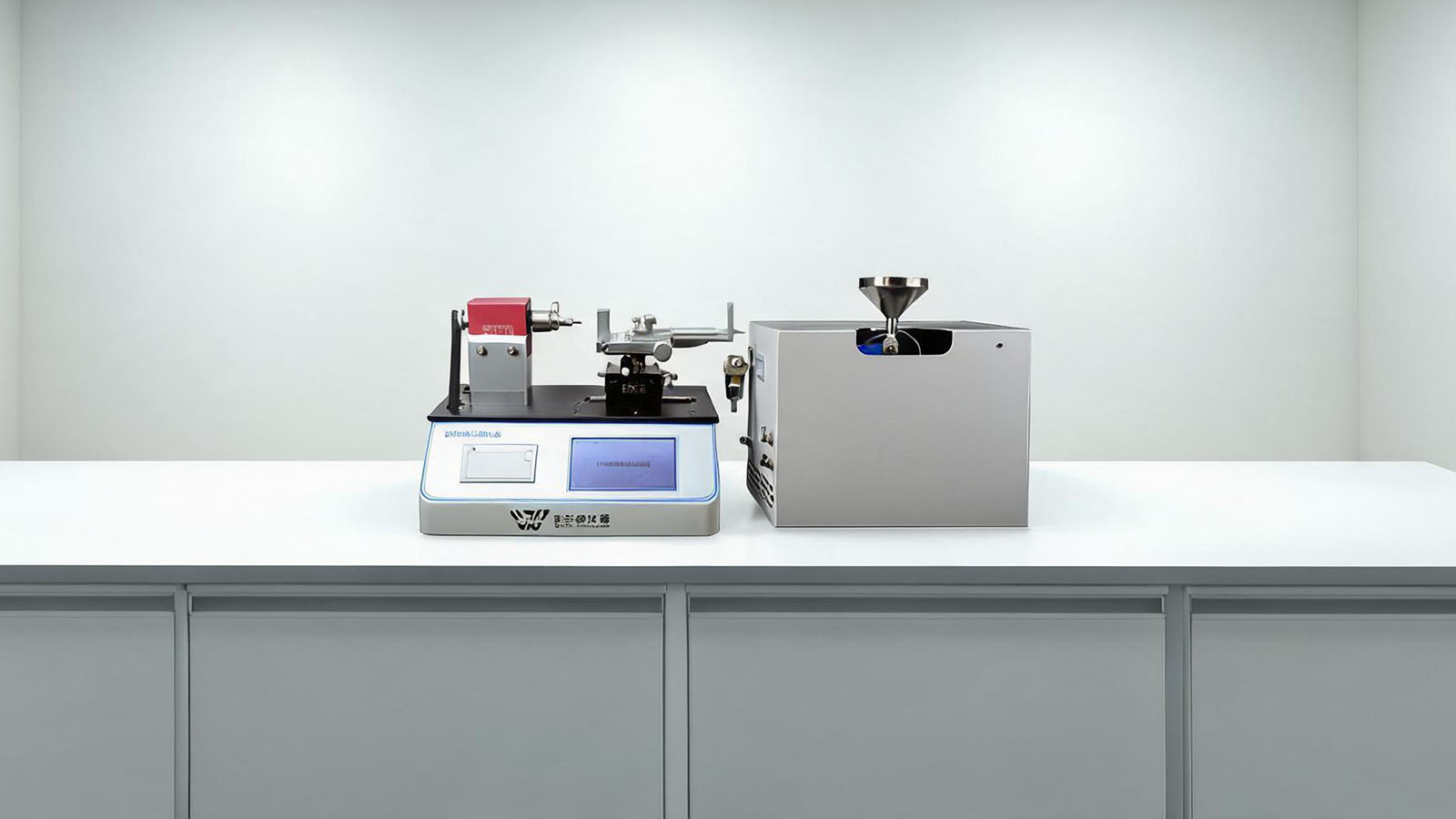
A Luer connector test equipment is not a single-purpose gauge. It is a multi-function testing platform designed to evaluate a connector's mechanical and sealing performance under controlled, repeatable conditions. The typical test menu covers several distinct properties, each addressing a different failure mode:
Liquid leakage (positive pressure) — The assembled connector is pressurized with water, usually in the range of 300 to 330 kPa, and held for a defined period while the operator observes for any visible leakage.
Air leakage (negative pressure) — A vacuum is applied to the connector bore, and the decay of negative pressure over time indicates whether gas can enter the system.
Separation force — An axial pulling force is applied to a mated assembly to determine the load at which the connector separates, verifying that the connection will not come apart in normal use.
Unscrewing torque — For locking (Luer lock) connectors, a specified torque is applied to confirm that the threaded engagement resists accidental loosening.
Stress cracking — The connector is assembled under axial force and torque, then inspected for cracks, which can occur in rigid or semi-rigid polymer materials.
Resistance to over-torque (thread stripping) — The connector is subjected to torque beyond its normal engagement to verify that the threads or lugs do not strip prematurely.
Ease of assembly — The force and torque required to bring a male and female connector together are measured, confirming that the connection is neither too loose nor too difficult to make.
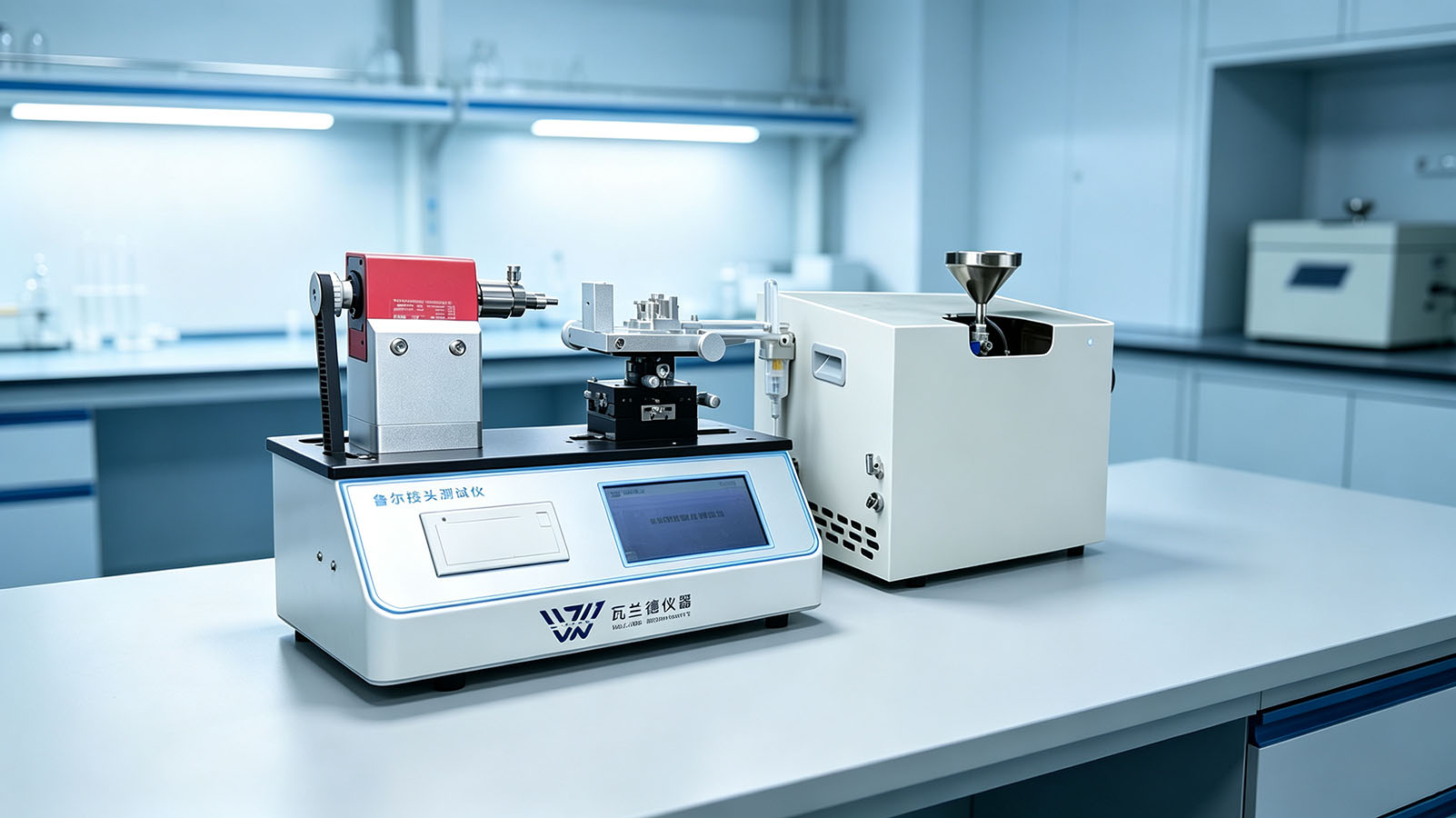
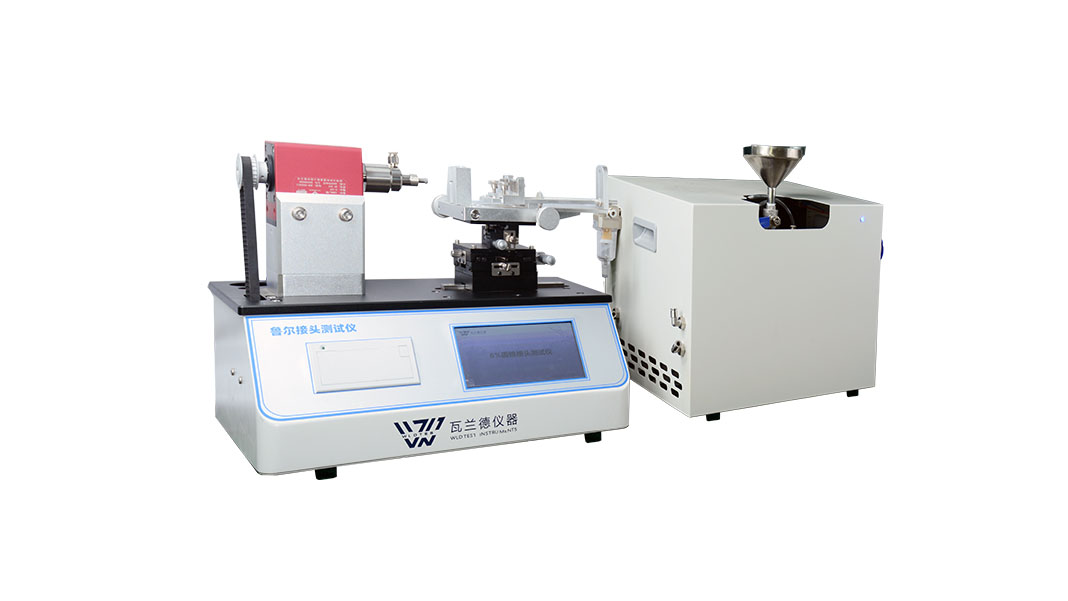
A Luer connector testing machine automates these procedures. The operator loads the sample, selects the test program, and the instrument applies the required force, torque, or pressure according to the configured parameters, then records whether the sample passed or failed.
Standards That Define the Tests
The test methods performed by a 6% Luer taper tester are not arbitrary; they are dictated by recognized standards. Two families of standards are most relevant.
The older, widely referenced set is ISO 594-1 and ISO 594-2, which specified the general requirements and performance requirements for conical fittings with a 6% (Luer) taper.
The newer, more comprehensive framework is the ISO 80369 series, titled "Small-bore connectors for liquids and gases in healthcare applications." In particular, ISO 80369-7 specifies the dimensions and functional performance requirements for connectors used in intravascular and hypodermic applications — the familiar Luer slip and Luer lock designs. ISO 80369-20 provides the general test methods, including pressure decay leakage, falling-drop leakage, negative-pressure air leakage, stress cracking, resistance to axial load separation, resistance to unscrewing torque, and resistance to over-torque.
A modern instrument is typically designed to cover both the legacy ISO 594 test items and the newer ISO 80369 test items, so that a single platform can serve manufacturers exporting to different markets with different compliance requirements.
Why Accuracy and Repeatability Matter
The value of a Luer connector test equipment lies in its ability to produce consistent, traceable results. Because the forces and pressures involved are relatively small — separation forces in the tens of newtons, torques below 1 N·m, and pressures in the hundreds of kilopascals — the instrument requires high-precision sensors and careful calibration. A well-designed tester reports axial force and internal pressure with fractional-percent accuracy, and records every test result for later review and quality documentation.
This traceability matters because medical device manufacturers operate under quality management systems (such as ISO 13485) that require objective evidence of conformity. A printout or digital record showing the applied parameters, the measured values, and the pass/fail judgment provides exactly that evidence.
Applications Across the Medical Device Industry
A 6% Luer connector performance tester is used wherever Luer fittings are manufactured or inspected. Typical applications include:
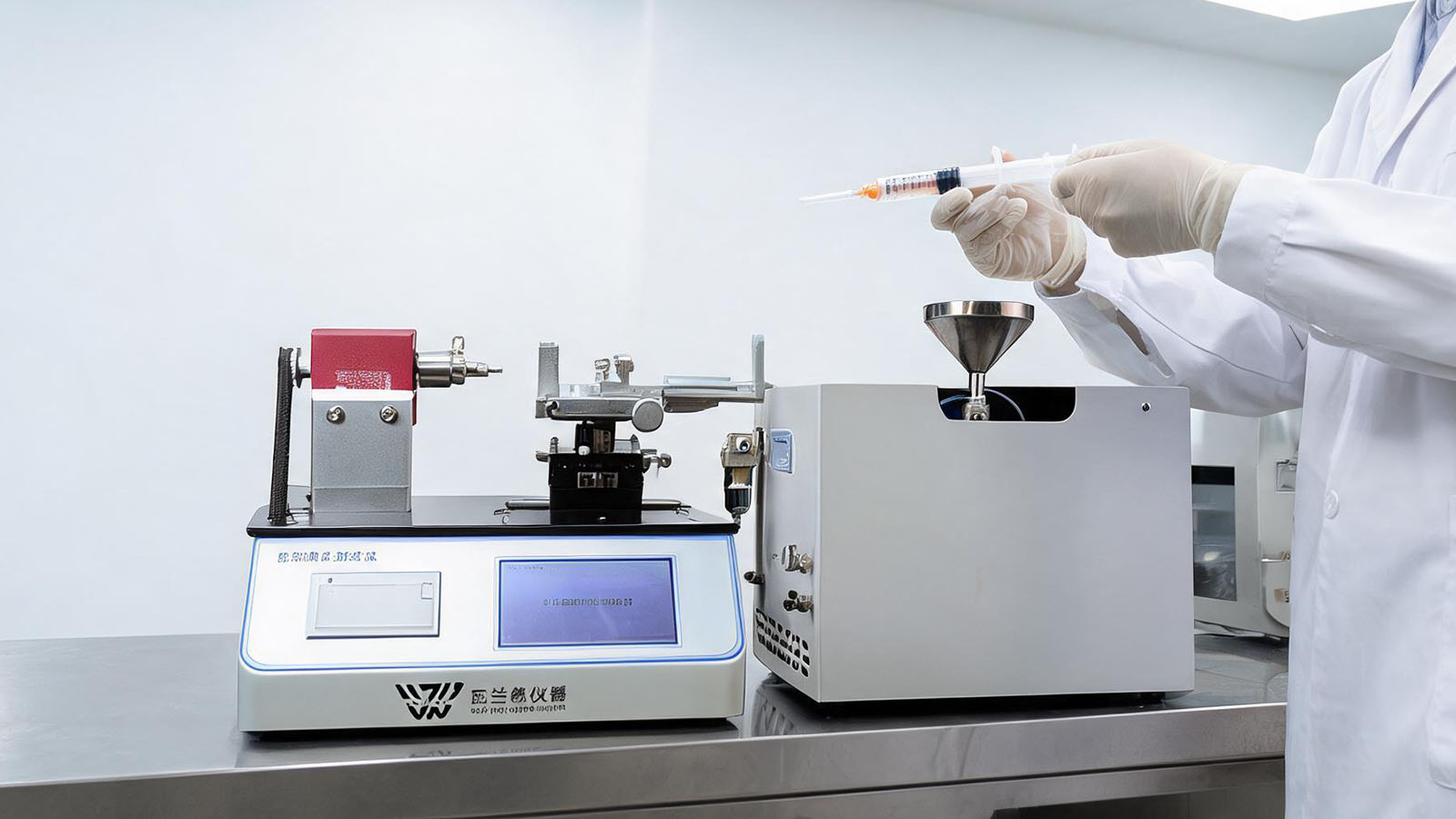
Syringe manufacturers — verifying the hub of a syringe and the mating tip of a needle. A syringe Luer connector tester ensures the needle-to-syringe connection is secure and leak-free.
Infusion and transfusion set producers — checking the connectors on tubing, drip chambers, and access ports.
Catheter manufacturers — testing the hubs of IV catheters, central venous catheters, and other vascular access devices.
Third-party testing laboratories — performing independent conformity assessment against ISO 80369 or GB/T 1962.
Regulatory and quality inspection bodies — verifying that imported or locally produced devices meet the applicable standards.
In each of these settings, the instrument serves the same fundamental purpose: to replace subjective, manual inspection with objective, repeatable, and documented measurement.
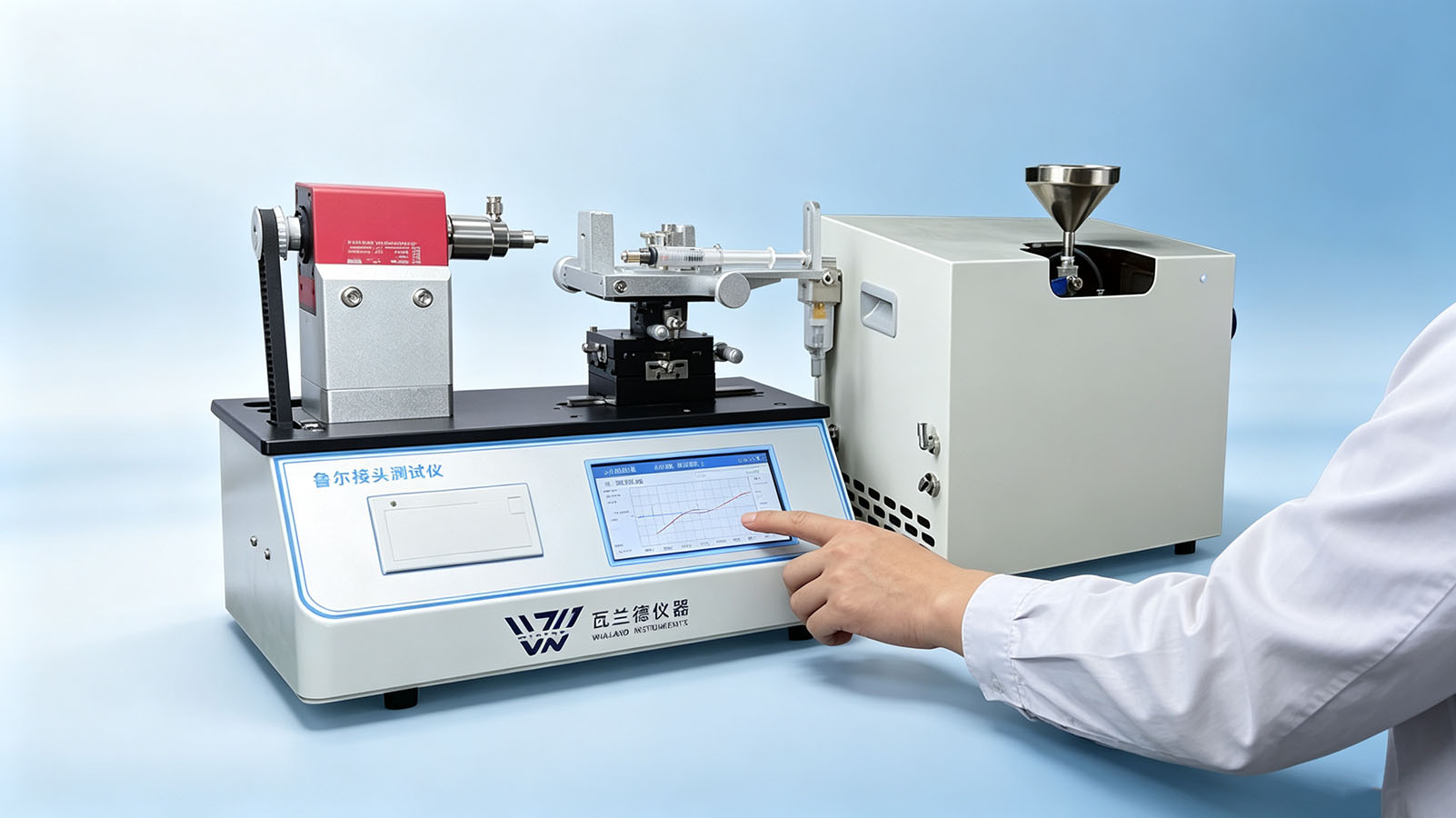
The 6% Luer connector performance tester is a specialized but essential instrument in the medical device quality chain. By measuring leakage, separation force, unscrewing torque, stress cracking, and related properties in accordance with ISO 594 and ISO 80369, it provides the objective evidence that Luer connectors are safe and fit for clinical use.