



Understanding Electronic Universal Testing Machines: A Technical Overview
2026-09-16 15:18Understanding Electronic Universal Testing Machines: A Technical Overview
Introduction to Material Testing Equipment
Material testing represents one of the foundational pillars of modern manufacturing and quality assurance. Across industries ranging from aerospace and automotive to packaging and consumer goods, understanding how materials behave under mechanical stress is essential for ensuring product safety, reliability, and performance. At the center of this discipline sits a versatile class of instruments known collectively as the electronic universal testing machine.
An electronic universal testing machine, often abbreviated as UTM, is a laboratory instrument designed to evaluate the mechanical properties of materials through controlled application of tension, compression and bending forces. Unlike specialized single-purpose testers, the "universal" designation reflects the machine's capability to perform multiple types of mechanical tests on a single platform. This versatility has made the universal testing machine an indispensable tool in research laboratories, manufacturing facilities, and quality control departments worldwide.
Fundamental Operating Principles
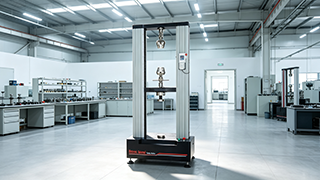
The core function of any universal tensile testing machine involves applying a controlled mechanical load to a standardized specimen and measuring the resulting deformation. Through this process, engineers derive critical material parameters including yield strength, ultimate tensile strength, elongation percentage, and modulus of elasticity.
In a typical tensile test configuration, the specimen is clamped between two grips. The lower grip remains stationary while the upper grip moves upward at a precisely controlled rate. As the specimen stretches, the machine continuously records both the applied force and the corresponding displacement.
Testing Capabilities and Applications
1. Tensile Testing
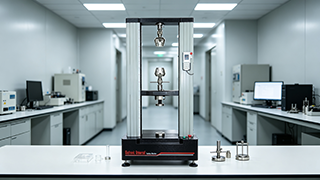
Tensile testing remains the most common application for the universal tensile testing machine. The test reveals how a material responds to stretching forces, providing fundamental properties that determine suitability for applications involving tension, bending, or pressure.
During a tensile strength testing machine operation, the specimen is prepared according to standardized geometries defined by organizations such as ASTM International or ISO. Common specimen shapes include dog-bone configurations for metals and plastics, strip specimens for films and textiles, and dumbbell shapes for rubber. Proper specimen preparation is critical — surface imperfections, dimensional variations, or misaligned grips can introduce stress concentrations that produce premature failure unrelated to intrinsic material properties.
2. Compression Testing
When configured as a compression testing machine, the electronic universal testing machine characterizes material behavior under compressive loads. Compression testing is particularly important for brittle materials like concrete, ceramics, and certain plastics that are much stronger in compression than tension. It also evaluates cushioning materials, foams, and packaging components that must absorb impact energy.
Compression tests can be performed on specimens with various geometries. Cylindrical specimens are common for concrete and rock testing. Cube specimens appear in some construction material standards. For thin, flat materials like corrugated board or foam sheets, the compression testing machine applies load through large platens to distribute pressure uniformly.
3. Peel, Tear, and Adhesion Testing
Beyond fundamental tension and compression, the universal testing machine performs specialized tests critical to specific industries. Peel testing measures the adhesive strength between bonded materials. The 180-degree peel test, common in packaging and tape manufacturing, pulls a bonded joint apart while recording the force required to propagate the peel front.
Tear testing characterizes materials' resistance to crack propagation. The trouser tear test and Elmendorf tear test (performed on dedicated pendulum apparatus) provide complementary information about material toughness in applications like packaging films, geomembranes, and textiles.
Industry Applications and Material Coverage
1. Metals and Alloys
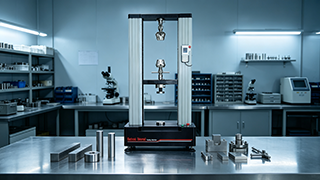
The metals industry was among the earliest adopters of universal testing machine technology. Every batch of steel, aluminum, copper, or specialty alloy undergoes tensile testing to verify that mechanical properties meet specifications. Structural steel for construction must demonstrate minimum yield strength and ductility. Aerospace alloys require precise characterization of strength-to-weight ratios and fatigue resistance. Even precious metals in jewelry and electronics applications undergo testing to verify hardness and formability.
2. Plastics and Polymers
The plastics industry relies heavily on the microcomputer controlled universal testing machine for product development and quality assurance. Polymer materials exhibit complex mechanical behavior including viscoelasticity, where properties depend on both temperature and loading rate. The electronic control system enables precise rate control for generating master curves that predict long-term behavior from short-term tests.
3. Rubber and Elastomers
Rubber testing presents unique challenges due to the material's large deformation capacity and nonlinear stress-strain behavior. A universal tensile testing machine for rubber applications requires long stroke capability — sometimes exceeding one meter of crosshead travel — to accommodate the extreme elongations that rubber can achieve before breaking.
4. Textiles and Fibers
Textile testing spans individual fiber characterization through fabric performance evaluation. Single fiber tensile testing on a sensitive electronic universal testing machine determines intrinsic fiber strength and modulus. Yarn testing evaluates how fibers perform when twisted together. Fabric testing measures properties like grab strength, tear resistance, and seam slippage that determine garment durability and performance.
5. Paper and Packaging
The paper and packaging industry employs the compression testing machine capability extensively. Edge crush test (ECT) evaluates corrugated board's resistance to crushing forces along the flutes. Ring crush test measures linerboard strength. Box compression test directly assesses finished container performance under stacking loads.
International Testing Standards
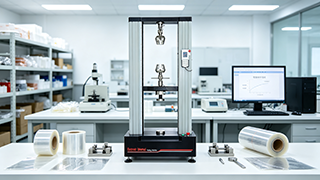
Mechanical testing without standardized procedures produces incomparable data. International organizations have developed extensive protocols governing specimen preparation, test conditions, and data reporting. ASTM International publishes widely used standards primarily in North America, while ISO standards achieve global acceptance. Regional standards bodies including JIS (Japan), DIN (Germany), and GB (China) provide additional local requirements.
Common tensile testing standards include ASTM E8 for metallic materials, ASTM D638 for plastics, and ISO 6892 for metallic materials. Compression testing references ASTM D695 for plastics and ISO 604. Flexural testing follows ASTM D790 and ISO 178. Each standard specifies specimen dimensions, testing speeds, environmental conditions, and calculation methods that ensure reproducible results across laboratories.
Choosing the Right Machine
Selecting an appropriate electronic universal testing machine requires careful analysis of testing requirements. Force capacity must exceed the maximum expected test load while providing adequate resolution at the low end. A machine with 100 kN capacity testing 50 N specimens would sacrifice measurement quality.
Crosshead speed range must accommodate all required testing rates. Standards for some materials specify rates in mm/min while others use strain rate (%/min), requiring conversion based on specimen geometry. The available speed range should span from slow creep tests to rapid quality control checks.
Grip and fixture compatibility significantly impacts machine versatility. Wedge grips suit metals and rigid plastics. Pneumatic or hydraulic grips accommodate variable specimen thicknesses and delicate materials. Specialty fixtures for bend, compression, peel, and puncture testing expand the machine's capability range.
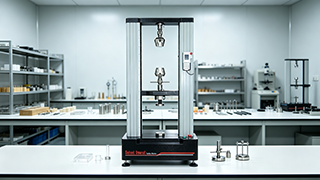
The electronic universal testing machine stands as one of the most versatile and widely applied instruments in materials science and engineering. From fundamental research to production quality control, from metals to polymers to biological tissues, these machines provide the quantitative mechanical characterization that underlies material selection, product design, and safety assurance.
The evolution from mechanical to electronic universal testing machine technology, and onward to today's microcomputer controlled universal testing machine systems, reflects the broader trajectory of scientific instrumentation toward greater precision, automation, and information integration. Whether performing a simple tensile strength test on a metal coupon or a complex multi-axial characterization of an advanced composite, the universal testing machine continues to serve as the essential tool for understanding how materials respond to mechanical forces.