



Understanding the Initial Tack Tester: How Adhesives Are Measured
2026-08-26 16:24Adhesives are everywhere. They hold labels on bottles, keep tapes sealed on shipping cartons, and secure protective films over screens and painted surfaces. Yet most people never stop to think about how a manufacturer decides whether an adhesive is "sticky enough." That decision is not made by feel or by guesswork. It is made with an instrument known as an initial tack tester.
The term "tack" refers to the ability of an adhesive to form a bond almost instantly, with very light pressure and very short contact time. It is a different property from final adhesion strength. A tape might grip a surface immediately when touched but fail after hours under load, or the reverse. Because these two behaviours are governed by different mechanisms, they are measured with different tools. The initial tack tester is the tool dedicated to that first, immediate grip.
Why Initial Tack Matters
Initial tack is often the first impression an adhesive makes. In a labelling line, a label that does not grab the container quickly will misalign or fall off. In packaging, a carton-sealing tape that needs to be pressed hard and held in place slows the whole operation. In a medical setting, a wound dressing that does not adhere promptly can be both inconvenient and unhygienic. For all of these reasons, the property is specified, tested, and controlled.
The measurement is also highly sensitive to formulation. The type of polymer, the tackifier resin, the solvent or carrier system, and the coating weight all shift the result. This is why a reliable and repeatable test method is essential: without it, a small change in raw materials could go unnoticed until a customer reports a field failure.
Common Test Methods
There is no single universal definition of tack, so several standardised methods have been developed. Each one simulates a slightly different kind of contact, and each is performed on a dedicated configuration of a tack testing machine.
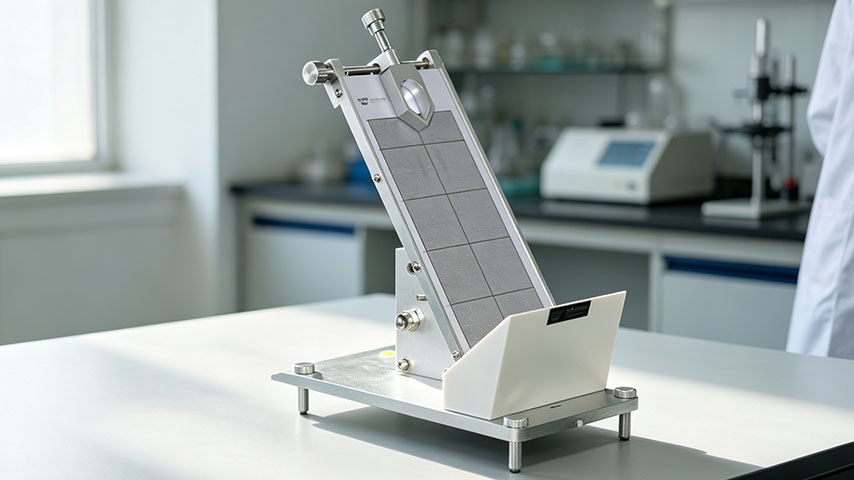
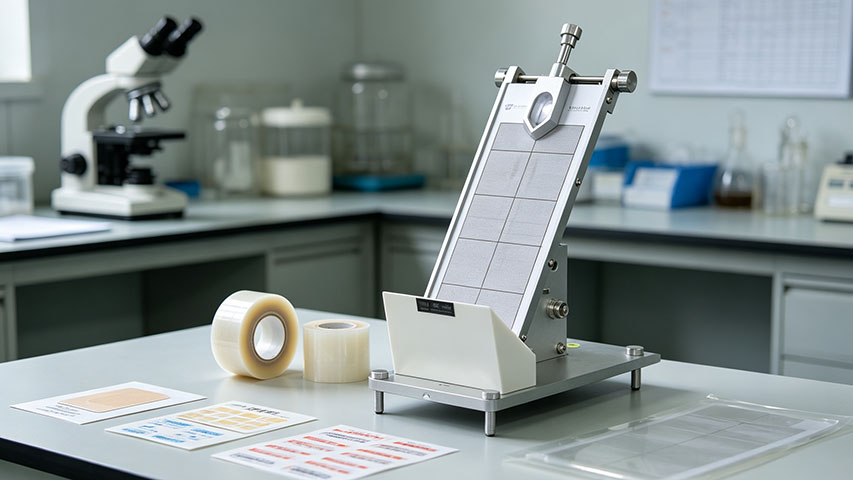
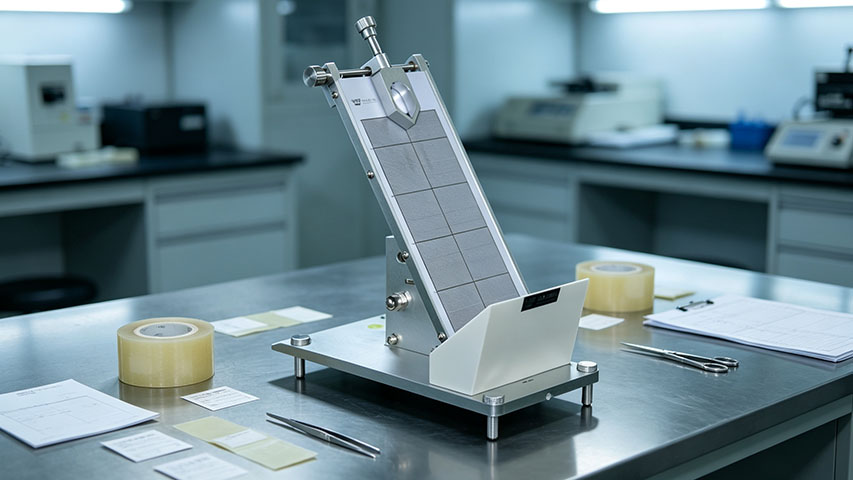
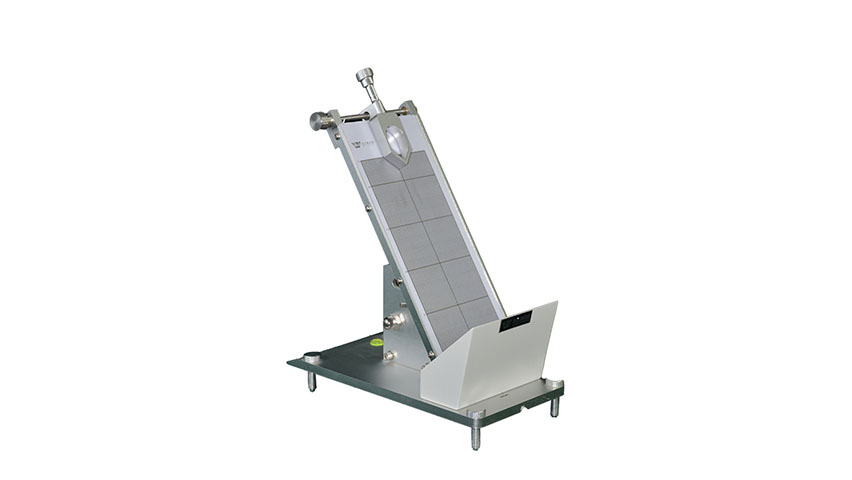
Rolling ball tack is one of the oldest and most widely used methods. A steel ball is released from a ramp onto the adhesive surface, and the distance the ball travels before stopping is recorded. A shorter roll distance indicates higher tack. The instrument used for this is commonly called a rolling ball tack tester.
How a Tack Tester Works
Regardless of the specific method, a modern tack tester shares a common underlying design. It combines a controlled contact mechanism with a force or displacement sensor, and it reports a numeric result that can be compared across batches and across laboratories.
The value of the instrument lies in repeatability. A skilled operator can feel differences by hand, but a hand test is subjective and cannot be written into a specification. A tack testing machine turns that subjective judgement into a number, and that number can travel: from a supplier's quality report, to a customer's incoming inspection, to an audit, to a dispute resolution.
Factors That Influence the Result
Several factors must be controlled for a tack measurement to be meaningful. Surface preparation is critical: dust, oil, or moisture on the substrate will change the result. The adhesive film itself must be uniform in thickness and free of bubbles or defects. The test should be performed at a controlled temperature and, ideally, a controlled humidity, because both affect the mobility of the adhesive polymer.
The substrate also matters. Tack is not a property of the adhesive alone; it is a property of the adhesive–substrate pair. The same adhesive will give different results on glass, on stainless steel, and on a low-energy plastic such as polyethylene. For this reason, standards specify the substrate material and its surface finish.
Finally, the operator must follow the standard exactly. Small deviations, such as a different ball-cleaning solvent or a slightly different pull speed, can shift the result enough to move a batch from "pass" to "fail."
Choosing the Right Instrument
When a laboratory selects an initial adhesion tester, the first question is which method, or methods, the application requires. A producer of pressure-sensitive tapes may need loop tack and rolling ball tack. A converter of labels may need loop tack only. A research group developing a new adhesive may want a probe tack instrument for its precision and its ability to produce a full force–time curve.
The second question is the range and resolution of the measurement. Some instruments are designed for quality control on a production floor and prioritise speed and robustness. Others are designed for the laboratory and prioritise accuracy and data logging. Both have their place.
The third question is standards compliance. A purchaser should confirm that the instrument can be configured to the relevant standard, whether that is ASTM D3121, ASTM D6195, or ASTM D2979, and that the data can be reported in the required format.
Initial tack is a small property with large consequences. It determines whether a label stays in place on a fast line, whether a tape seals a carton on the first pass, and whether a medical dressing behaves as the clinician expects. The initial tack tester exists to make that property measurable, repeatable, and comparable.